Table Of Content
But when genital herpes does show up, it sometimes does so in the form of irritating bumps that can look like pimples. “Herpes can cause blisters and little pustules, but what usually brings someone with herpes into my office is the pain,” Dr. Dweck says. The blisters often look like little pimples on a red base, and they can be extremely uncomfortable. If you shave, tweeze, or wax your hair, you can develop ingrown hairs.
How to Prevent Ingrown Hairs, According to Dermatologists
Your razor will typically feel less effective after a few uses, in which case it’s time to toss it or swap out the blades. Some prescription creams reduce hair regrowth, especially when used after hair removal treatments. Treating the pubic region before shaving may reduce your risk of ingrown hair when the hair starts to grow back. Each strand of hair grows in a follicle beneath the skin. When people wax or shave, they only remove the strands of hair, not the follicles. Antibiotics are used to treat certain boils that develop near the vagina.
Gently exfoliate before you shave.
This can lead to infection when the outer layers of the skin are compromised. Trapped moisture causes the surfaces of your skin to stick together, increasing friction and leading to skin inflammation and damage. Eczema, also known as atopic dermatitis, is a chronic (persistent) inflammatory skin condition that causes a scaly, red, itchy rash. Although the exact cause is unknown, eczema is believed to be the result of genetic and environmental factors.
How to treat ingrown pubic hair
The first sign of an infected ingrown hair is often a bump. As the infection progresses, you may see pus, and the bump may grow larger. Ingrown hairs are most common in areas of hair removal, such as the face, legs, armpits, and pubic region. They also occur more often in men who shave their beards. Shaving and waxing creates sharper hairs that tend to get trapped in the skin. Pai goes on to explain that shaving tends to irritate the skin, too, which is why you may have more irritation with ingrown hairs caused by shaving.
I Tried A Vaginal Steam Treatment, And Here's What Happened - HuffPost
I Tried A Vaginal Steam Treatment, And Here's What Happened.
Posted: Wed, 20 Apr 2016 07:00:00 GMT [source]
Other hair-removal methods, such as waxing or tweezing, can lead to ingrowns, too. Though you likely think about it much less than, say, the hair on your head, your pubic hair is susceptible to many of the same problems that can crop up in other hairy areas. It is also important to avoid shaving too close, as this can make it easier for bacteria to enter the skin. A person should then wash the area with warm, soapy water and pat it dry. Avoid touching the area until it has fully healed, as this can cause further irritation. Once the hair emerges above the skin, use sterile tweezers or a needle to gently pull it.
What causes ingrown hairs?
I Put A Sheet Mask On My Vagina To Make My Ingrown Hairs Disappear - YourTango
I Put A Sheet Mask On My Vagina To Make My Ingrown Hairs Disappear.
Posted: Wed, 07 Sep 2016 07:00:00 GMT [source]
Luckily, ingrown hairs usually go away without treatment. This removes a dead layer of skin cells and helps release ingrown hairs. Make small, circular motions to wash the affected areas with a washcloth, exfoliating brush, exfoliating gel, or scrub.
That’s a problem because it causes inflammation that can lead to solid or pus-filled bumps, pain, itching, a bacterial infection, hyperpigmentation, and possibly permanent scarring. Ingrown hairs are sometimes called razor bumps, shave bumps or barber bumps. For ingrowns that have already cropped up around the bikini line, exfoliating can assist in alleviating them faster. Patel says to "gently scrub the area twice a day with an exfoliating glove or a washcloth with an exfoliating wash" to remove buildup of oils and dead skin cells. One ingrown hair may form a cyst — a red, yellow, or whitish lump beneath the skin.
Try out a serum meant to prevent ingrown hairs.
Ingrown hairs in the pubic area usually appear as tiny, red bumps or pustules that might be encircled by irritated or inflamed skin. These bumps can look like pimples or boils and may lead to discomfort or itching. Occasionally, one might notice visible hair follicles trapped beneath the skin's surface, suggesting the presence of ingrown pubic hairs. Also, if there is severe discomfort, inflammation, or frequent recurrences of ingrown hairs, it is advisable to consult a doctor. Ingrown hair cysts happen when a hair follicle gets blocked, and the hair grows into your skin instead of out. You should never pop an ingrown hair cyst because it can cause infection and scarring.
Find more top doctors on
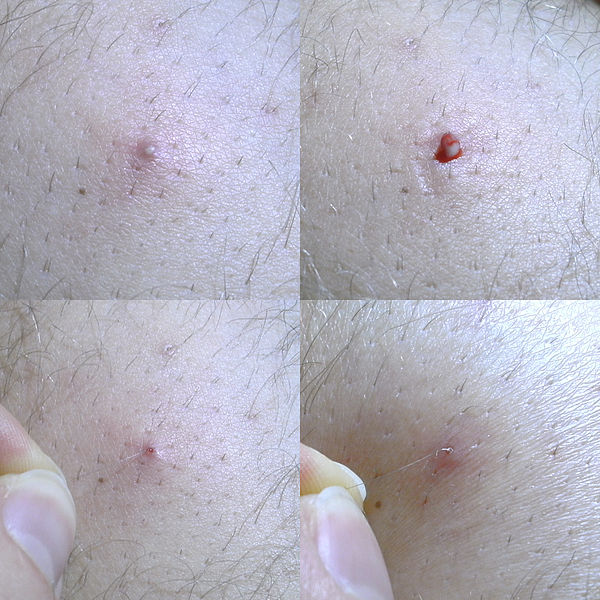
The bacteria will enter the body through the skin and cause infection. Some prescription medications can help prevent ingrown hairs. Retinoid creams are effective in removing dead skin cells that may contribute to ingrown hairs. Boils near the vagina are caused by bacteria that enter through the skin and infect a hair follicle. Keeping your genital area clean and practicing good hygiene is the best way to prevent recurring boils. If you shave your pubic area with a razor, change your razor often.
If infections recur or are severe, you may need medical treatment. You also want to call a doctor if the bump is large, painful and contains pus, which is another indication of infection. "Pus is your body's way of getting rid of an infection," she explains.
An old or dull razor can harbor bacteria and cause ingrown hairs. A vaginal boil is a pus-filled bump that develops when a hair follicle becomes infected. Boils can occur outside of the vagina on the labia, vulva or pubic area. Most vaginal boils resolve on their own with at-home treatment but in some cases, medical treatment from a health provider is needed.
When the hair penetrates your skin, the skin acts as if it is a foreign object and becomes inflamed. Most instances of ingrown hair get better without treatment. You can avoid this condition by not removing hair or not shaving very close to the skin.


No comments:
Post a Comment